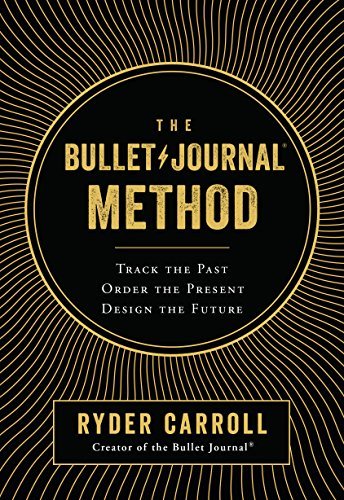
The Bullet Journal Method
Read: November 2025
Notes & Thoughts
The Bullet Journal Method
The Bullet Journal Method by Ryder Carroll is more than just a planning system—it’s a mindfulness practice disguised as a productivity method. Carroll, the creator of the Bullet Journal system, presents a comprehensive guide to tracking the past, ordering the present, and designing the future through intentional analog note-taking.
The Core System
The Bullet Journal Method is built on a few simple components that work together to create a flexible, personalized organization system:
Rapid Logging
The foundation of the system is rapid logging using three types of bullets:
- Tasks (•) - Things you need to do
- Events (○) - Date-related entries that can be logged but cannot be modified
- Notes (—) - Information you want to capture
Collections
The system uses different collections to organize information:
- Daily Log - The day-to-day entries capturing tasks, events, and notes
- Monthly Log - A bird’s eye view of the month with a calendar and task list
- Future Log - A place to store items for months ahead
- Custom Collections - Dedicated pages for specific topics, projects, or ideas
Migration
One of the most powerful aspects of the system is monthly migration—the practice of reviewing and consciously deciding what tasks deserve your continued attention. This forces you to evaluate whether incomplete tasks are still important.
The Philosophy Behind the Method
Carroll emphasizes that the Bullet Journal is not just about getting things done—it’s about getting the right things done:
Intentionality
The act of writing by hand slows you down and forces you to be more selective about what deserves your time and attention. Every time you write something down, you’re making a conscious decision about its importance.
Reflection
Regular reflection through migration and review helps you identify patterns, learn from experiences, and course-correct when necessary. The system encourages you to examine not just what you’re doing, but why you’re doing it.
Mental Inventory
Carroll introduces the concept of “mental inventory”—the practice of periodically assessing your commitments, goals, and priorities to ensure they align with what truly matters to you.
Key Concepts
The Five, Four, Three, Two, One Exercise
A powerful goal-setting framework:
- List 5 things that matter to you most
- Narrow to 4 goals for the next few months
- Identify 3 things you can do in the next few weeks to move toward those goals
- Find 2 things you can do this week
- Determine 1 thing you can do today
Deconstruction
Breaking down overwhelming goals or projects into small, actionable steps. This makes daunting tasks feel manageable and helps you build momentum.
Custom Collections
The flexibility to create custom collections for anything you want to track—books to read, gratitude logs, habit trackers, project plans. The system adapts to your needs rather than forcing you into a predetermined structure.
Practical Benefits
- Reduced Mental Clutter - Externalizing your thoughts and tasks frees up mental space
- Increased Mindfulness - The analog nature of the system keeps you present
- Better Prioritization - Migration forces you to evaluate what truly matters
- Improved Focus - Having a clear system reduces decision fatigue
- Personal Growth - Regular reflection promotes self-awareness and intentional living
- Flexibility - The system adapts to changing needs and circumstances
My Takeaways
The Bullet Journal Method has helped me move from reactive task management to intentional living. Key insights:
- Analog over digital - There’s real value in slowing down and writing by hand
- Less is more - The simplicity of the system is its strength; resist over-complicating it
- Migration is magic - The monthly review process is where real clarity happens
- Customization matters - The system should serve you, not the other way around
- Reflection drives growth - Regular review turns experience into wisdom
Favorite Quotes
“We’re experiencing death by a thousand tabs.”
“The Bullet Journal is a framework designed to help you live an intentional life, one that’s both productive and meaningful.”
“Before we can change our lives, we have to change our minds.”
“The goal of the Bullet Journal Method is to help you transform the things you have to do into the things you want to do by helping you live with intention.”
“We’re not trying to do more things. We’re trying to do the right things.”
Notes
The book goes beyond just explaining the basic Bullet Journal system featured on the website and in countless YouTube videos. Carroll explores the psychology and philosophy behind why the system works, making it valuable even for experienced bullet journalists. The method has evolved my approach to both productivity and mindfulness, showing that they don’t have to be separate pursuits.