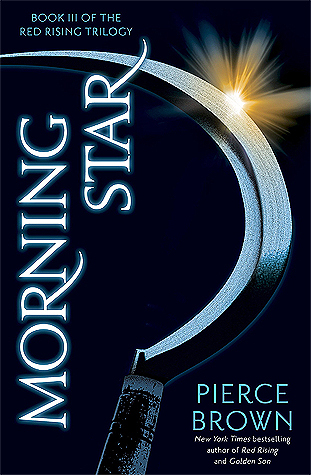
Morning Star
Read: October 2025
Notes & Thoughts
Morning Star
Morning Star concludes the original Red Rising trilogy with a sprawling epic of revolution, redemption, and the brutal cost of freedom. After the devastating ending of Golden Son, Pierce Brown delivers a finale that’s part war epic, part psychological drama, and entirely unforgettable.
Rising from the Ashes
Picking Up the Pieces
The novel begins with Darrow broken—physically, mentally, and spiritually. After the Jackal’s betrayal and months of torture, he must rebuild himself while the rebellion crumbles without him. This opening arc is raw and painful, showing the real cost of what Darrow has endured.
The Reconvening
Darrow must reunite his scattered allies:
- Sevro and the Howlers - Still loyal but operating independently
- Ragnar - The Obsidian who becomes crucial to expanding the rebellion
- Dancer - The Sons of Ares leader with a very different vision of revolution
- Mustang - Whose own plans for change may conflict with Darrow’s methods
The Full-Scale Revolution
War on Multiple Fronts
Morning Star delivers the epic-scale warfare the trilogy has been building toward:
- Space battles - Fleet engagements that determine the fate of worlds
- Ground combat - Sieges and assaults on a massive scale
- Guerrilla warfare - Tactics from those with fewer resources
- Psychological operations - Winning hearts and minds across the Colors
The Expanding Scope
The revolution spreads beyond Mars to the entire solar system. Each Color must decide where they stand, and Darrow discovers that not all of them see him as a liberator.
Character Arcs Completed
Darrow’s Evolution
From mine rat to Institute winner to fleet commander to revolutionary leader to… what? Morning Star forces Darrow to confront who he’s become and whether he’s lost himself in pursuit of Eo’s dream.
The Jackal’s Endgame
Adrius au Augustus reaches the apex of his power and madness. His final schemes are both brilliant and horrifying, cementing his place as one of the genre’s great villains.
Cassius’s Journey
Perhaps the most compelling arc in the book, Cassius moves from enemy to something far more complex. His struggle with honor, loyalty, and truth mirrors Darrow’s own moral crisis.
Mustang’s Vision
Virginia au Augustus emerges as a fully realized character with her own plan for the future—one that may be wiser than Darrow’s but requires different sacrifices.
The Philosophy of Revolution
Violence Versus Reform
The central tension isn’t just Golds versus everyone else—it’s about how to create lasting change:
- Darrow’s path - Burn it all down and rebuild from ashes
- Dancer’s concern - That violence only breeds more violence
- Mustang’s approach - Reform from within while revolution pressures from without
The Problem of Power
Who should rule after the Golds fall? Can the oppressed become fair rulers? Does revolution just replace one hierarchy with another? Morning Star doesn’t shy away from these uncomfortable questions.
The Cost of Victory
Every triumph comes with loss. Every strategic decision means sacrifice. Brown forces readers and characters alike to ask: is freedom worth this price?
Standout Moments
The Siege of Mars
The extended battle for Mars is where everything converges—military strategy, political maneuvering, personal vendettas, and the fate of the revolution.
The Triumph
A scene that deliberately echoes Roman triumphs, examining the symbolism of victory and the dangerous allure of power and vengeance.
The Final Confrontations
Multiple climactic face-offs that are as emotionally devastating as they are action-packed. Brown has earned these moments through two and a half books of character development.
The Resolution
An ending that provides closure while acknowledging that victory doesn’t erase trauma and that building something new is harder than tearing down the old.
Themes Brought Full Circle
Breaking the Chains
Eo’s dream and her final words to Darrow are examined through the harsh light of reality. Breaking chains is simple; building a world where people want to stay free is infinitely harder.
Humanity and Monstrosity
The line between hero and monster gets tested repeatedly. Darrow commits terrible acts for righteous reasons, while some enemies show unexpected humanity.
Legacy and Memory
What we leave behind, who we do it for, and whether the dead would approve of what we do in their names—questions that haunt Darrow throughout.
Hope Versus Pragmatism
Can idealism survive contact with political reality? Should it? The tension between Eo’s poetic dream and the brutal pragmatism required to achieve it drives much of the conflict.
What Makes It Powerful
The Emotional Resonance
Brown has spent two books making us care about these characters. When they fall, when they triumph, when they betray or reconcile—it all matters.
The Scale
This is space opera done right. Massive fleets, planetary invasions, solar-system-spanning political machinations, all grounded by characters we know intimately.
The Honest Ending
Morning Star doesn’t offer easy answers or cheap victories. The ending is earned through suffering and sacrifice, and it acknowledges that revolution is only the beginning of the real work.
The Writing
Brown’s prose has evolved throughout the trilogy. By Morning Star, he’s confident enough to let quiet moments breathe while also delivering action sequences that rival any in the genre.
My Thoughts
Morning Star sticks the landing of an incredibly ambitious trilogy. It delivers the epic scale warfare and revolution that the series promised while never losing sight of the personal, human story at its core.
The book’s greatest strength is its refusal to simplify. Golds aren’t all evil. Reds and other Colors aren’t all good. Revolution isn’t automatically righteous, and the victors aren’t automatically heroes. This moral complexity elevates the entire trilogy above typical chosen-one narratives.
Darrow’s journey from naïve miner to scarred revolutionary is complete, but it’s not the simple hero’s journey. He’s broken and remade multiple times, and he emerges changed in ways that are both inspiring and tragic.
Favorite Quotes
“I am the Reaper. And I have come to reap.”
“Death isn’t empty. It’s full of mystery and wonder and darkness and hope.”
“A man’s fate is his own temper.”
“I will die for those I love. I will kill for those I love. I will sin for those I love. Nothing will stop me.”
“We are the heart of man. And man doesn’t kneel. Man doesn’t surrender. Man endures.”
“The measure of a man is what he does when he has power.”
Notes
This trilogy finale cements Pierce Brown as one of the premier voices in modern science fiction. Morning Star doesn’t just conclude the story—it completes a meditation on power, justice, violence, and what it means to be human in a society that tries to reduce people to their function.
The book works on multiple levels: as a satisfying conclusion to Darrow’s arc, as an examination of revolutionary ethics, and as a damn good space opera. It’s brutal, beautiful, heartbreaking, and ultimately hopeful in a way that feels earned rather than given.
Fair warning: this ending will stay with you long after you finish reading.