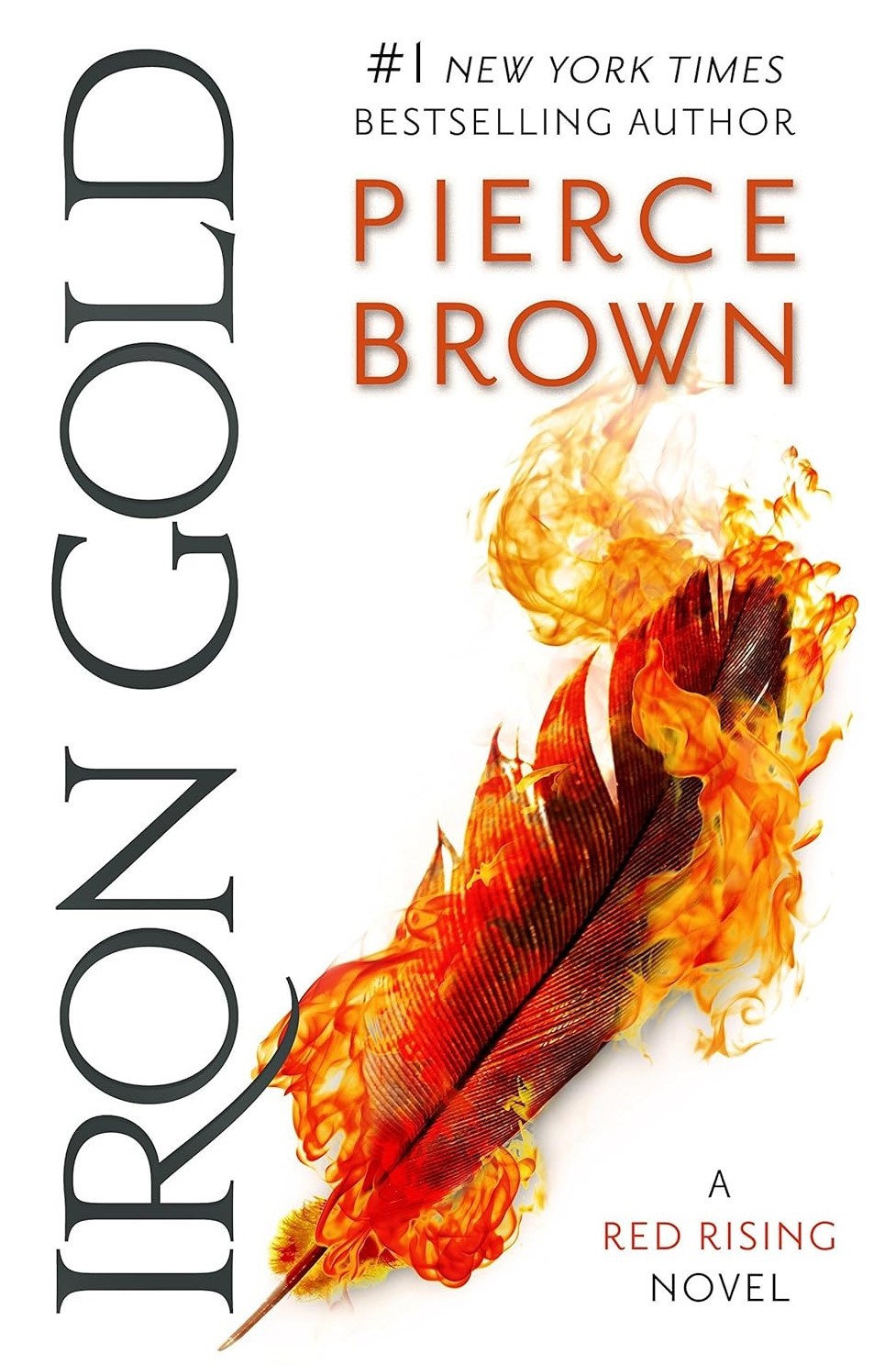
Iron Gold
Notes & Thoughts
Iron Gold
Iron Gold launches the second trilogy in Pierce Brown’s Red Rising universe, jumping ten years beyond Morning Star to explore the messy reality of what happens after the revolution “wins.” This is a darker, more complex, and more morally ambiguous book than the original trilogy—and that’s entirely the point.
A New Structure
Multiple Perspectives
Unlike the original trilogy’s singular focus on Darrow, Iron Gold introduces four POV characters:
- Darrow - The Reaper, now a military commander fighting remnant Golds on the outer planets
- Lysander - A Gold heir raised by Octavia au Lune, struggling with his heritage and ideals
- Ephraim - A jaded war veteran turned thief, working the criminal underworld
- Lyria - A young Red woman discovering that freedom doesn’t mean equality
This structure shows the post-revolution society from multiple angles, each perspective revealing different truths.
Ten Years After
The Republic’s Reality
The utopian vision of the Rising has crashed into complicated reality:
- Endless war - The Rim Golds refuse to surrender, creating a grinding conflict
- Political dysfunction - The Senate is paralyzed by competing interests and factions
- Economic inequality - Freedom hasn’t translated to prosperity for the low Colors
- Cultural tensions - Centuries of color-based hierarchy don’t disappear overnight
- Darrow’s methods - His brutal tactics in the outer territories create controversy at home
The Promise Versus the Reality
Eo dreamed of breaking chains. The Republic broke them. But that was the easy part. Building a functional society from the ashes of the old order—where former oppressors and oppressed must coexist—proves far more difficult than revolution.
The Four Stories
Darrow: The Weight of Command
Ten years of war have hardened Darrow further. He’s spent so long being the Reaper that he’s forgotten how to be anything else. His absence from his family and his brutal tactics in the war alienate him from the Republic he fought to create.
His arc explores:
- The cost of becoming a weapon
- Whether peace is possible for those defined by war
- The disconnect between heroes and the people they fight for
- Marriage and fatherhood for someone who only knows how to fight
Lysander: The Exiled Heir
Raised by the former Sovereign in exile, Lysander was taught that the hierarchy was just and necessary. He’s brilliant, honorable, and genuinely believes in noblesse oblige—that superior people should rule benevolently.
His arc examines:
- Whether the old order had redeeming qualities
- Idealism versus reality on both sides
- The seduction of authoritarian efficiency versus democratic chaos
- What happens when the “good” aristocrat gains power
Ephraim: The Broken Veteran
A former Sons of Ares operative now scraping by in the criminal underworld, Ephraim represents those chewed up and spit out by revolution. He lost everything and gained nothing from the Rising.
His arc reveals:
- The people revolution leaves behind
- How trauma shapes choices and limits futures
- The criminal ecosystem that emerges in unstable societies
- That not everyone wants to be saved or can be
Lyria: The Disappointed Believer
A young Red woman who believed the Rising would make her life better, only to find herself still poor, still powerless, just without the color-coded excuse.
Her arc shows:
- How revolution’s benefits don’t trickle down equally
- The new forms of oppression that replace the old
- Agency and survival when systems fail you
- Hope struggling against disillusionment
The Central Conflict
Abduction and Conspiracy
The plot centers on the abduction of Darrow’s and Mustang’s son, Pax, which pulls all four protagonists into collision. But the kidnapping is just the surface—beneath it lies a conspiracy that threatens everything the Rising achieved.
Competing Visions
The real conflict is ideological:
- Can democracy work in a post-hierarchical society?
- Are Darrow’s methods necessary or do they perpetuate cycles of violence?
- Does Lysander’s ordered vision have merit or is it just tyranny with better PR?
- Can the Republic survive its internal contradictions?
Themes Evolved
The Second Generation Problem
What happens when the revolutionaries’ children inherit a world they didn’t fight for? How do you maintain revolutionary values when the revolution is over?
The Failure of Idealism
Eo’s dream was beautiful but incomplete. It addressed breaking chains but not what comes after. Iron Gold is about the painful process of learning that freedom is just the beginning.
Moral Compromise
Every POV character faces impossible choices where all options are bad. Brown forces readers to ask: what’s the right decision when there are no good ones?
The Appeal of Authoritarianism
Through Lysander, Brown honestly examines why people might choose order over chaos, efficiency over gridlock, strong leadership over messy democracy—and why that’s dangerous.
What Makes It Different
A Mature Tone
This isn’t the explosive, almost YA energy of Red Rising. Iron Gold is slower, more contemplative, more willing to sit with discomfort and ambiguity.
No Clear Heroes
Even Darrow is presented critically. His methods are questioned, his absences criticized, his assumptions challenged. Brown doesn’t give readers the comfort of obvious good guys.
The Expanded Universe
We see more of the solar system, more colors, more cultures, more complexity. The world feels lived-in and messy in ways the original trilogy’s more focused narrative didn’t have room for.
The Long Game
Iron Gold is clearly setting up a longer, more complex story. It’s less a complete book and more the opening movement of a symphony.
My Thoughts
Iron Gold will frustrate some readers who want more of the original trilogy’s energy and moral clarity. That’s the point. Brown is challenging both his characters and his readers to grapple with complexity.
The multiple POV structure takes time to adjust to, especially after three books with Darrow’s singular voice. But each perspective reveals something essential about the post-revolution world that Darrow alone couldn’t show.
Lysander is perhaps the most controversial addition—a sympathetic antagonist who genuinely believes in his vision and makes compelling arguments. Brown doesn’t strawman the opposition; he makes you understand it, which is far more unsettling.
The book is darker and more cynical than the original trilogy, but there’s still hope—it’s just harder-won and more fragile. The ending is brutal and sets up stakes that make you immediately reach for Dark Age.
Favorite Quotes
“Peace is a lie. There is only war.”
“The problem with democracies is that everyone thinks they should have a say, even if they’re idiots.”
“We won the war. But we’re losing the peace.”
“You can’t build a new world on the bones of the old one and expect it to stand straight.”
“I killed for freedom. But freedom isn’t free. Someone always pays.”
Notes
Iron Gold is a bold evolution of the series. It trades the original trilogy’s revolutionary fervor for post-revolutionary disillusionment. Not everyone will appreciate this shift, but it’s a more honest examination of what revolution actually means.
The four-POV structure works once you adjust to it, though Darrow’s sections still carry the most weight. The weaker sections are offset by how the perspectives collectively paint a fuller picture.
This book makes you question everything you thought you knew from the original trilogy, which is uncomfortable but necessary. Revolution isn’t an ending—it’s a beginning, and beginnings are messy.